Accepting extra work without approval
Consequence: The team incurs costs that the customer may dispute.
Solution: Confirm scope and price changes before performing additional work.
INDUSTRY SOLUTIONS
Connect the agreed scope of work with delivery, billing and collection.

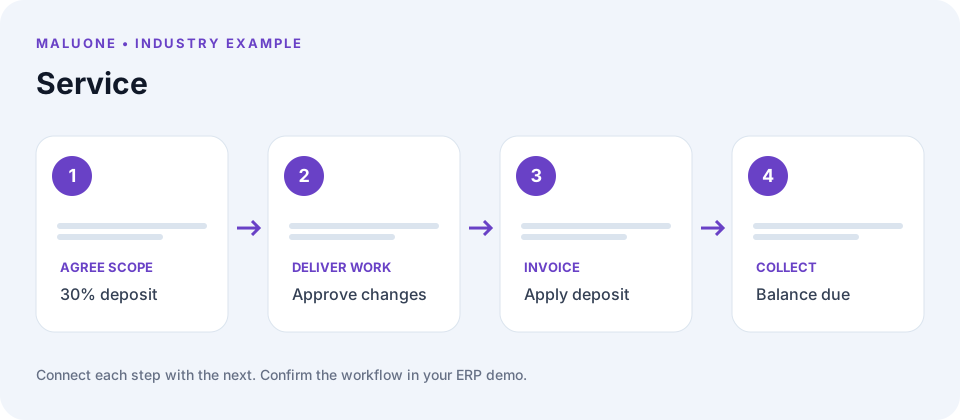
A service company agrees a maintenance job with a 30% deposit and the balance after acceptance. The customer then requests additional work. Use this scenario to discuss scope approval, related expenses, final billing and the remaining balance.
Consequence: The team incurs costs that the customer may dispute.
Solution: Confirm scope and price changes before performing additional work.
Consequence: Management cannot reliably explain the margin on the work.
Solution: Keep a consistent job reference on expense records and supporting documents.
Consequence: The customer may be asked to pay the same amount twice.
Solution: Reconcile deposits, final invoices and receipts before confirming the balance due.
Use these illustrative cases to evaluate the workflow with the demonstration team. Confirm the available screens, controls and configuration for your scope.
Agree a job for 10 million LAK and collect a 30% deposit of 3 million. The customer approves an additional 2 million of work. The revised agreed amount is 12 million; after applying the deposit, 9 million remains before other receipts, credits, tax or charges. Demonstrate the approved change and payment references rather than relying on a note alone.
Read the visual: compare each document or stage separately, then follow the reconciliation shown beside it.
Approve the change before performing extra work
12m − 3m = 9m remaining
Record deliverables, exclusions, price, acceptance evidence and billing milestones.
Keep approved extra work and relevant expenses traceable to a consistent job reference.
Review the revised scope, deposit and acceptance evidence before confirming the final amount due.
Billing and collection stall because acceptance evidence is unclear.
Review the agreed deliverables, record disputed items and assign a resolution owner.
The balance cannot be explained without reviewing completed work and terms.
Agree the authorized treatment of work performed, charges and any refund using the original agreement.
Job profitability depends on an undocumented allocation.
Agree an allocation basis, retain the expense evidence and have the responsible reviewer approve it.
Customer records, Sales and Finance; confirm project costing, time capture, scheduling and recurring billing requirements separately.
Agreed changes, invoice and deposit references, unpaid balances and job-related expenses where supported.
Agree job identifiers, scope-change approval, acceptance evidence and how deposits appear in the final reconciliation.
Agree the results and any limitations in the implementation scope before launch.
Bring sample documents and one difficult exception. We can use these to discuss required modules, setup, responsibilities and acceptance criteria.
See the implementation approach →
Request a Service Demo