Moving goods without a transfer record
Consequence: One branch shows stock it no longer has, while another appears short.
Solution: Record both the sending and receiving sides of each transfer.

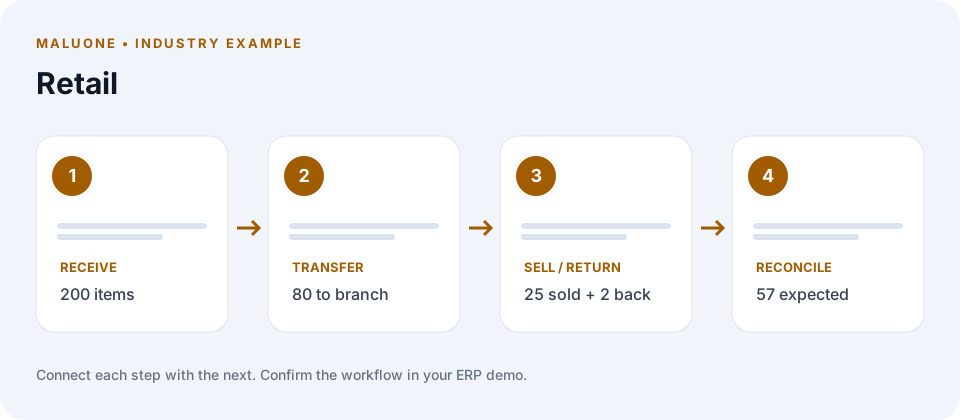
A retailer receives 200 items and transfers 80 to a second branch. That branch sells 25 and receives two customer returns. If there are no other movements, its expected stock is 57. Use this example to explore transfers, returns and reconciliation.
Consequence: One branch shows stock it no longer has, while another appears short.
Solution: Record both the sending and receiving sides of each transfer.
Consequence: Staff may sell an item that should have been held for inspection.
Solution: Check the returned item and record its condition and intended handling.
Consequence: Cash discrepancies become difficult to distinguish from card or bank settlement timing.
Solution: Reconcile each payment method against its supporting records at daily close.
Use these illustrative cases to evaluate the workflow with the demonstration team. Confirm the available screens, controls and configuration for your scope.
Branch B receives 80 items, sells 25 and receives two returns. Its physical total is 57 if there are no other movements. If one return is damaged, only 56 are potentially saleable before reservations or other holds. Quantity reconciliation and saleable availability answer different questions.
Read the visual: compare each document or stage separately, then follow the reconciliation shown beside it.
80 − 25 + 2 = 57 physically held
57 physical items ≠ 57 saleable items
Count branch receipts against dispatch evidence and investigate transfer shortages.
Retain the sale reference, returned quantity, item condition and approved refund or exchange decision.
Reconcile each payment method and review stock differences with a clear cutoff and responsible reviewer.
The sending and receiving branches disagree about ownership of the missing goods.
Retain dispatch and count evidence, investigate the difference and approve any correction.
The cashier's close is confused with the bank's settlement date.
Track the payment-method evidence and reconcile timing differences separately from cash shortages.
Recording only a refund or only a new sale hides part of the stock movement.
Review the original item, replacement item and any price difference together in the demonstration.
Inventory, Sales, Purchasing and Finance. Confirm POS, barcode, payment-terminal and offline needs separately.
Branch stock, transfers, returns and payment-method reconciliation for a selected business day.
Agree units, branch ownership, damaged-stock handling, price/discount authority and daily-close responsibility.
Agree the results and any limitations in the implementation scope before launch.
Bring sample documents and one difficult exception. We can use these to discuss required modules, setup, responsibilities and acceptance criteria.
See the implementation approach →
Request a Retail Demo