Using an outdated material list
Consequence: Purchasing buys the wrong quantities and production runs short.
Solution: Review and approve the current material list before releasing the order.
INDUSTRY SOLUTIONS
Follow materials into production and explain the cost of finished goods.

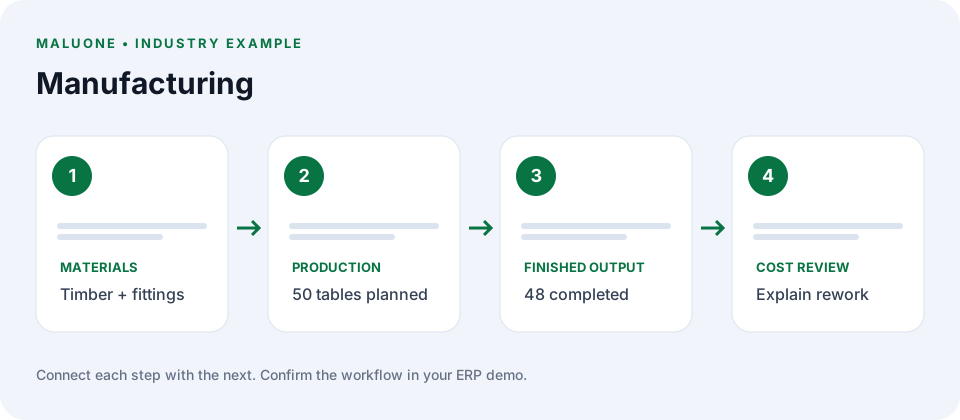
A furniture workshop plans 50 tables. It reviews the material list, issues timber and fittings, records 48 completed tables and identifies material used for rework. Use this example to discuss production quantities, remaining work and costing with the demo team.
Consequence: Purchasing buys the wrong quantities and production runs short.
Solution: Review and approve the current material list before releasing the order.
Consequence: Stock and production costs no longer explain what actually happened.
Solution: Record additional material usage and its reason when it occurs.
Consequence: Sales promises goods that are still unfinished.
Solution: Record actual finished quantities and review any work still in progress separately.
Use these illustrative cases to evaluate the workflow with the demonstration team. Confirm the available screens, controls and configuration for your scope.
A workshop plans 50 tables and completes 48. Sales needs a reliable delivery date for the remaining two; the supervisor needs the material shortage and rework reasons; finance needs actual consumption and unfinished-work evidence. Use one production order to demonstrate these three views of the same job.
Read the visual: compare each document or stage separately, then follow the reconciliation shown beside it.
Review remaining materials and the delivery date
Connect the job reference across each handover
Confirm the production requirement, delivery date and approved specification.
Review availability, record actual issues and returns, then separate finished output from remaining work.
Agree quality acceptance, warehouse receipt and the basis for comparing actual usage with plan.
The team mixes specifications and cannot explain extra usage.
Record the approved revision and identify which unfinished work is affected.
Completed quantity is assumed to mean saleable quantity.
Verify how goods are held, accepted, rejected or reworked before customer commitment.
One job's consumption and cost may be assigned to another.
Use consistent production references and review issue, return and allocation evidence.
Manufacturing, Purchasing, Inventory, Finance and Management approvals.
Material shortages, production progress, unfinished work and usage variance; confirm availability and definitions.
Agree material revisions, routing, quality steps and labor/overhead allocation before setting acceptance criteria.
Agree the results and any limitations in the implementation scope before launch.
Bring sample documents and one difficult exception. We can use these to discuss required modules, setup, responsibilities and acceptance criteria.
See the implementation approach →
Request a Manufacturing Demo