Production runs out of materials
Solution: Review the approved material list against planned output before release.
Expected result: Shortages are identified earlier.
MALUONE ERP MODULES
Explore the production flow from required materials to finished output and its cost.
For production planners, supervisors and cost accountants.
Request a Manufacturing Demo
Solution: Review the approved material list against planned output before release.
Expected result: Shortages are identified earlier.
Solution: Record actual completed quantities separately from planned output.
Expected result: Available stock reflects goods actually produced.
Solution: Record additional material use and rework reasons.
Expected result: Cost reviews have supporting evidence.
Plan → Materials → Production → Actual output → Cost review
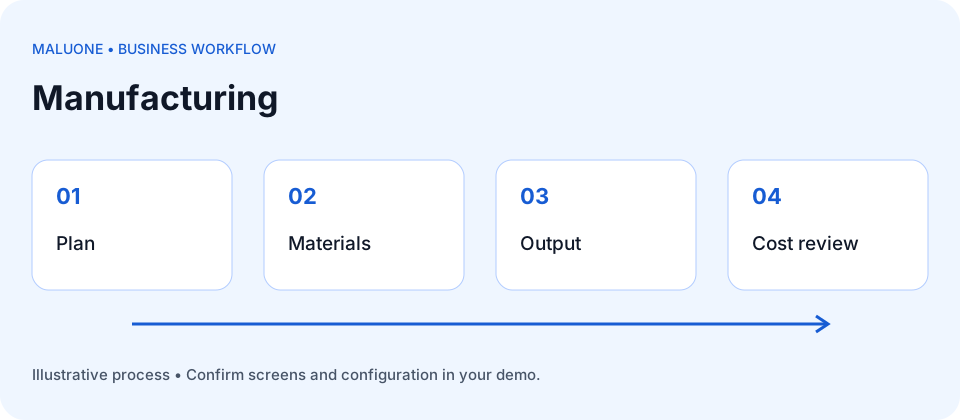
Discuss bills of materials and the steps needed to make your products.
Follow planned production, materials issued and finished goods received.
Review how material usage and production output contribute to product costs.
Prevention: Review the approved material list before releasing production.
Prevention: Record scrap, additional usage and rework reasons as they occur.
Prevention: Record actual finished quantities and keep remaining work separately visible.
Use these illustrative cases to evaluate the workflow with the demonstration team. Confirm the available screens, controls and configuration for your scope.
Plan 50 tables using four legs each: the planned requirement is 200 legs. Issue 204 legs, complete 48 tables, retain eight legs in unfinished work and record four damaged legs. The reconciliation is 192 legs in completed tables + 8 in unfinished work + 4 damaged = 204 issued. This example isolates one component; timber, labor and overhead require separate review.
Read the visual: compare each document or stage separately, then follow the reconciliation shown beside it.
Planned quantity is not finished stock
192 + 8 + 4 = 204 legs
Confirm the current bill of materials, units, routing and planned output before release.
Record material issues, returns and extra usage with the production reference and reason.
Separate finished output, remaining work and scrap; review how the agreed costing setup treats each.
The planned completion date no longer reflects actual readiness.
Review the shortage, remaining work and revised schedule; approve any material substitute before use.
Extra material and effort disappear from the cost explanation.
Identify the affected batch, record additional usage and agree how rework is reviewed and costed.
Sales may promise goods that are not ready for release.
Separate completed quantities from accepted, held and rejected output; verify the required quality-release process in the demo.
Review approved specifications, material readiness and release responsibilities.
Capture actual issues, returns, output and reasons for deviations at the agreed stage.
Compare planned and actual usage, unfinished work and scrap. Confirm labor, overhead and work-in-progress allocation support.
Agree the results and any limitations in the implementation scope before launch.
Bring one bill of materials, a production order and actual consumption records.
Discuss production progress, material usage and cost review requirements.
Confirm routing, work-in-progress, quality checks and cost allocation requirements before agreeing scope.