Outstanding customer amounts are unclear
Solution: Match receipts to invoices and review unpaid balances.
Expected result: Collection follow-up uses reconciled amounts.
MALUONE ERP MODULES
Explore the connection between daily transactions, accounting records and financial reporting.
For accountants, finance managers and business owners.
Request a Finance Demo
Solution: Match receipts to invoices and review unpaid balances.
Expected result: Collection follow-up uses reconciled amounts.
Solution: Compare bank records with posted transactions and investigate differences.
Expected result: Unmatched entries become visible.
Solution: Agree a close checklist, account mapping and review responsibilities.
Expected result: Period-end work follows a repeatable process.
Transaction → Review → Journal → Reconcile → Report → Close
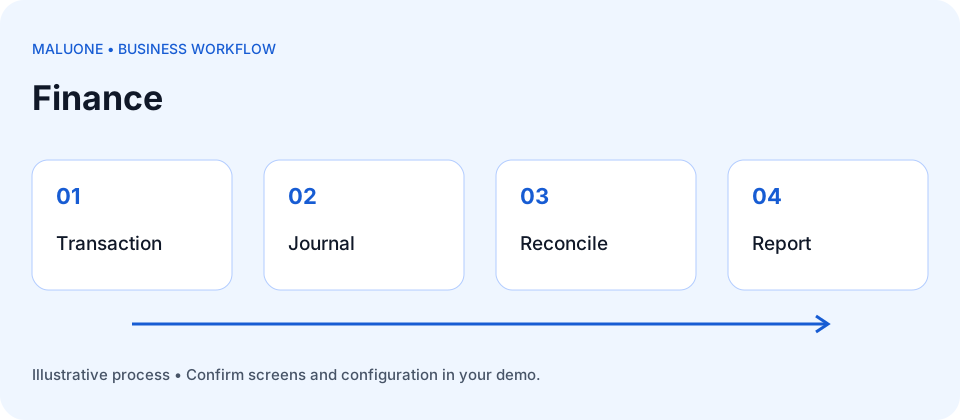
Review customer amounts due and supplier obligations alongside invoices and payments.
Follow journals and cash or bank transactions through the accounting process.
Discuss financial statements, tax requirements and period-end procedures with the demonstration team.
Prevention: Review cash movements separately from income and expense reports.
Prevention: Check the transaction date, accounting period and account mapping before posting.
Prevention: Use a signed-off reconciliation checklist before period-end closing.
Use these illustrative cases to evaluate the workflow with the demonstration team. Confirm the available screens, controls and configuration for your scope.
Invoice a customer 10 million LAK and record a receipt of 4 million against it: 6 million remains unpaid before other adjustments. If a later approved credit reduces the invoice balance by 1 million, the remaining balance becomes 5 million. Review the source documents and customer balance together; the invoice total is not the amount of cash collected.
Read the visual: compare each document or stage separately, then follow the reconciliation shown beside it.
10m − 4m = 6m outstanding
6m − 1m = 5m outstanding
Keep customer and supplier invoices, receipts, payments and supporting references traceable to their accounting entries.
Compare bank records and customer or supplier balances with posted records for the same period. Investigate unmatched items.
Agree required reconciliations, responsible reviewers and the evidence needed before closing a period.
Applying the amount to the wrong invoice distorts collection follow-up.
Identify the payer and payment purpose, investigate the reference and confirm the approved matching process.
Timing differences may be mistaken for missing money.
Retain the deposit and settlement references, distinguish timing items from errors and follow unresolved items.
Editing a prior transaction can invalidate reports already reviewed.
Ask the finance owner to demonstrate the authorized correction procedure, period controls and retained history.
Confirm who prepares and approves journals, payments and credits.
Compare reports using the same dates, posting status, currency and branch filters.
Trace selected balances to source documents. Confirm account mapping, tax and statutory requirements with the responsible finance team.
Agree the results and any limitations in the implementation scope before launch.
Bring your chart of accounts, opening balances and required report examples.
Discuss general ledger, customer/supplier balances and financial statements.
Tax treatment, statutory reporting, currencies and posting rules require confirmation for your jurisdiction and configuration. Examples are illustrative, not accounting advice.