One reference chain
Keep the customer or supplier, product, unit and original document reference consistent across handovers.
Follow the documents, stock and money through one connected business process. See what each team prepares, what the next team checks, and what managers review.
Discuss your ERP workflow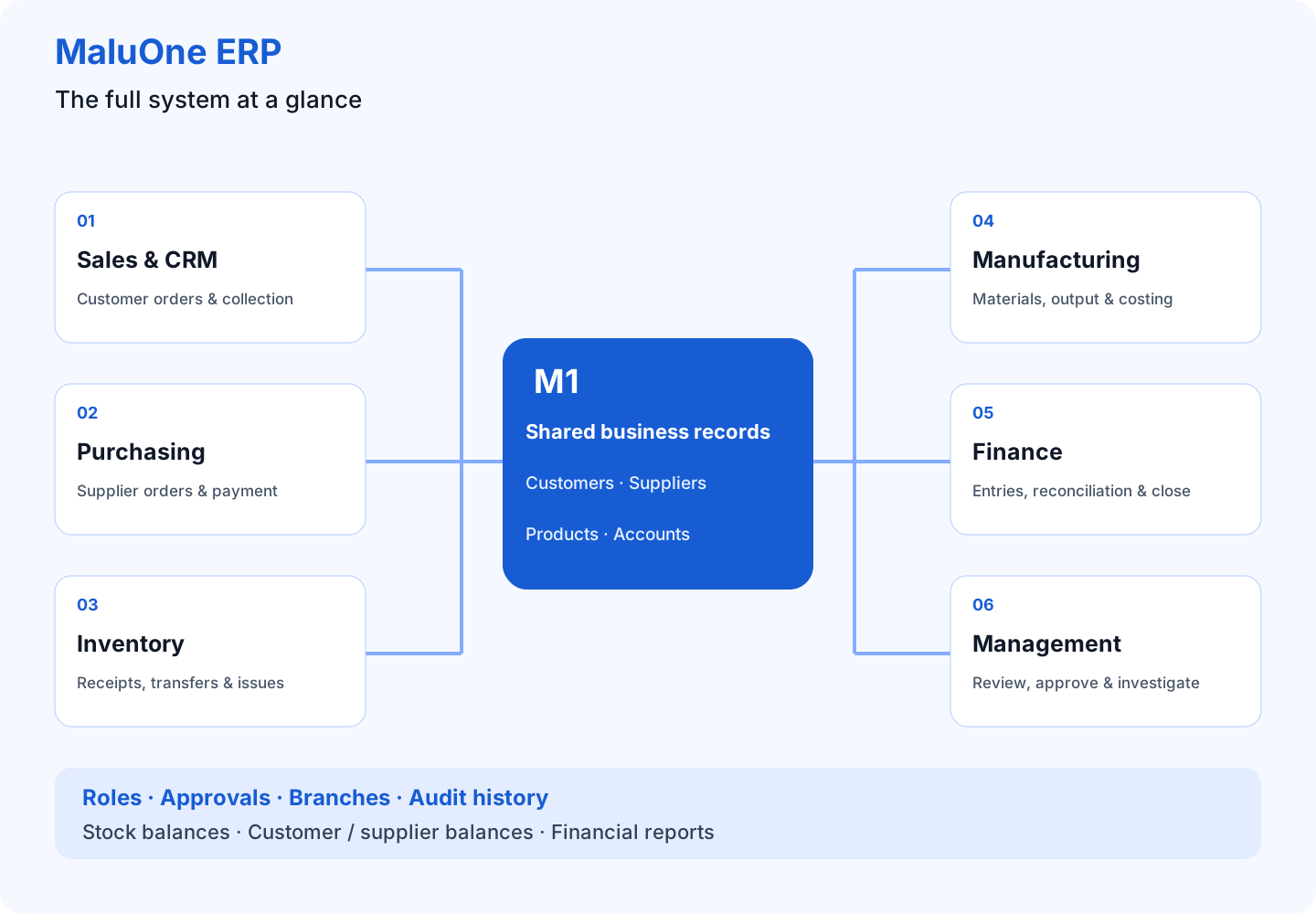
Each document records a different event. An order is a commitment, a delivery records movement, an invoice records an amount billed, and a receipt records payment. Keep their references connected without treating them as the same event.
01 · Sales & CRM

Sales records customer requirements, products, prices and terms. The warehouse records actual dispatch; finance reviews billing and payment references.
Check the approved order, actual quantity delivered and billing terms. Match each receipt to the correct customer invoice; keep undelivered and unpaid amounts separate.
Order 100 units; deliver 60 and leave 40 pending. Invoice the delivered 60 for 12 million LAK under the agreed terms. Receiving 5 million leaves 7 million unpaid on that invoice.
Monetary examples exclude tax and other adjustments.60 + 40 = 100 units
5m + 7m = 12m LAK
02 · Purchasing

The requesting team states the need. Purchasing agrees the supplier order. Receiving staff count and inspect goods; accounts payable reviews the invoice.
Compare requested, ordered, received and invoiced quantities. Resolve shortages or damage and check supplier invoice references before approving payment.
Order 100 cartons at 300,000 LAK each; receive 80. The 20 outstanding cartons represent 6 million LAK at the order price. Review an invoice for all 100 against receipt evidence and agreed supplier terms.
Monetary examples exclude tax and other adjustments.Record actual receipt: 80, not 100
At 300,000 LAK per carton · review before payment
03 · Inventory

Warehouse staff record the product, unit, location and actual quantity for each movement. A count team records physical quantities at an agreed cutoff.
Trace each balance to receipts, transfers and issues. Investigate count differences before an authorized adjustment. Separate damaged or held items from saleable stock.
Receive 100 in A, transfer 30 to B and issue 20 from A. The balances are A=50 and B=30, total 80. The transfer changes location, not the total quantity.
Monetary examples exclude tax and other adjustments.100 received − 20 issued = 80 total
Retain count evidence before approving a correction
04 · Manufacturing

Planning confirms the current material list and required output. Production records actual consumption, returns, scrap, rework and finished quantities.
Check material readiness, approved specifications and actual output. Confirm quality release, unfinished work and cost allocation requirements before agreeing scope.
Plan 50 tables but complete 48. Keep the remaining two visible as unfinished work. Reconcile materials consumed, returned or damaged before reviewing the cost of completed output.
Monetary examples exclude tax and other adjustments.Planned quantity is not finished stock
192 + 8 + 4 = 204 legs
05 · Finance

Finance reviews source documents, account mapping, posting dates and approvals. Responsible reviewers reconcile bank, customer and supplier balances.
Use consistent periods and filters. Trace report balances to source records. Confirm which entries are generated automatically and which require manual review or posting.
A 10 million LAK invoice with a 4 million receipt leaves 6 million unpaid. An approved 1 million credit reduces that balance to 5 million. Invoice value and cash collected are different measures.
Monetary examples exclude tax and other adjustments.10m − 4m = 6m outstanding
6m − 1m = 5m outstanding
06 · Management

Process owners define responsibilities and approval rules. Managers review supporting documents, decide within their authority and assign follow-up actions.
Confirm access by role and branch, which changes require renewed approval, and what history is retained. Trace summary figures to the underlying documents.
With a sample review threshold of 5 million LAK, a 7 million purchase request requires manager review. Test the buyer and manager roles and a change made after approval.
Monetary examples exclude tax and other adjustments.7m exceeds 5m LAK: manager review required
Verify authority and retained history in the demo
Keep the customer or supplier, product, unit and original document reference consistent across handovers.
Review ordered, delivered, invoiced and paid quantities or amounts independently. Partial transactions should remain explainable.
Use approved return, credit, cancellation or adjustment procedures. Retain the original evidence and review the stock and financial effects together.
These diagrams explain the intended business workflow. Ask to see the normal transaction, a partial transaction and a correction with your own sample documents. Confirm supported modules, integrations, permissions, accounting rules and limitations in writing. The separate MaluOne CRM application manages MaluOne's own sales pipeline; automatic CRM-to-ERP exchange is not implied.
Bring one real order and its related documents. We can use them to discuss the workflow, responsibilities and implementation scope.
Discuss your ERP workflow